
Parvaaz means "To take flight"
Evidence-based solutions to expand economic opportunity at scale
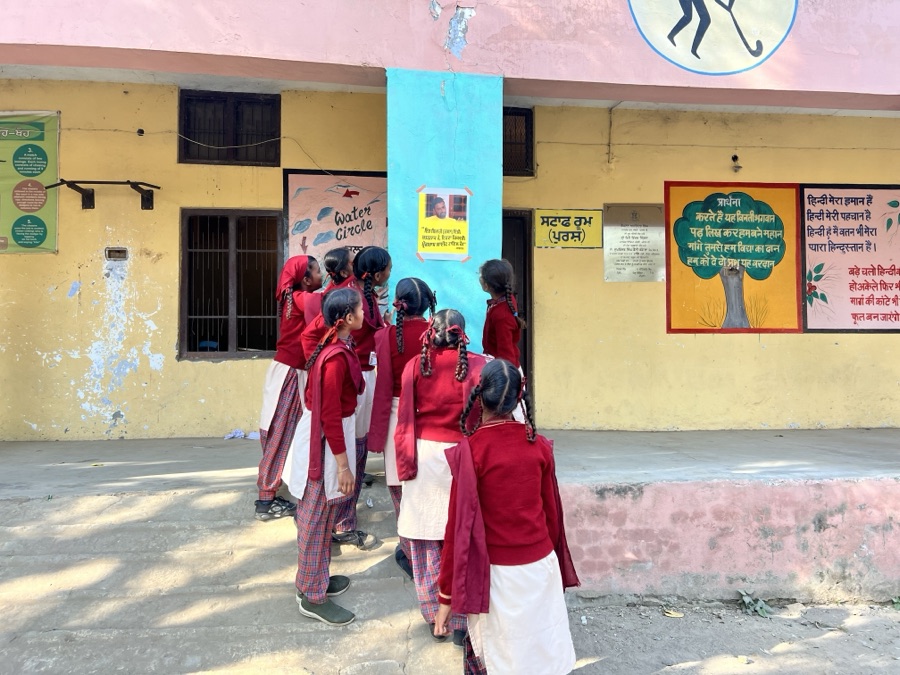
The Parvaaz Initiative, housed at the Center for Effective Global Action (CEGA) at UC Berkeley, uses insights from behavioral science research to design and scale programs that expand economic opportunity across India. We partner with governments and implementing organizations to design solutions, test them rigorously, and scale what works — bringing evidence-backed approaches directly into classrooms, communities, and the lives of the people they're meant to help.
Just as R&D fuels growth in the economy, social R&D is needed to unlock new high-impact policy solutions to our world's most pressing challenges. Social policy innovation today is disjointed: academic research rarely translates to scale, while the policies governments and NGOs implement at scale often operate without clear evidence of what works.
Parvaaz brings these two worlds together. We're behavioral scientists and development economists who partner with governments and implementing organizations from day one to design, pilot, and scale solutions that can reach millions. Our focus is livelihoods and education, with the goal of expanding economic opportunity for the world's poorest people. We pick big policy challenges — educational attainment, youth unemployment, drug use — and design and incubate novel solutions. Most development economics research stops at a proof-of-concept publication; we keep going, partnering with policy implementers to move solutions from pilot to scale and rigorously measure their real-world impact.
This program uses an innovative film-based curriculum to reduce drug experimentation among youth in Punjab by correcting misconceptions about addiction risk and recovery. In partnership with an internationally-renowned filmmaker, we developed engaging documentary videos featuring people sharing authentic experiences with drug use. Research shows students who completed the program were significantly more likely to believe heroin carries high addiction risk and less likely to believe willpower alone overcomes addiction. These beliefs matter because they sit at the root of experimentation and drug use — young people who underestimate addiction risk and overestimate their own ability to quit are more likely to try drugs in the first place.
The Department of Education, Punjab is now scaling the program across secondary schools statewide, reaching over 750,000 students in 3,600+ schools in a single academic year.
This program brings technology-enabled math practice directly into primary school classrooms during instructional class time. By providing practice that's closely aligned with the classroom curriculum, tailored to each student's level, and paired with immediate feedback, we help students catch up to grade level while reducing teacher burden. Similar approaches have shown promise in research settings, and we're working to solve the challenges of scaling such solutions in resource-constrained contexts.
This work focuses on providing opportunities for youth in India to build human capital and valuable skills, opening the door to employment in our modern, global economy. As artificial intelligence becomes increasingly central to the global economy, we're exploring how AI training can unlock new opportunities for employment and entrepreneurship among young people in India.
Drug use among youth is a pressing concern worldwide, with consequences for wellbeing, education, and economic opportunity. Yet evidence-based solutions for reducing demand among young people remain scarce.
Our research uncovered a core insight: youth hold significant misbeliefs about the risks of drug experimentation and addiction. We designed a curriculum to directly address these misbeliefs, and we're testing and scaling it in Punjab, India, where drug use among youth is a particularly acute problem: some sources estimate that up to 3% of the population uses opioids, with rates even higher among young people — as high as 15% among men aged 18 to 35.
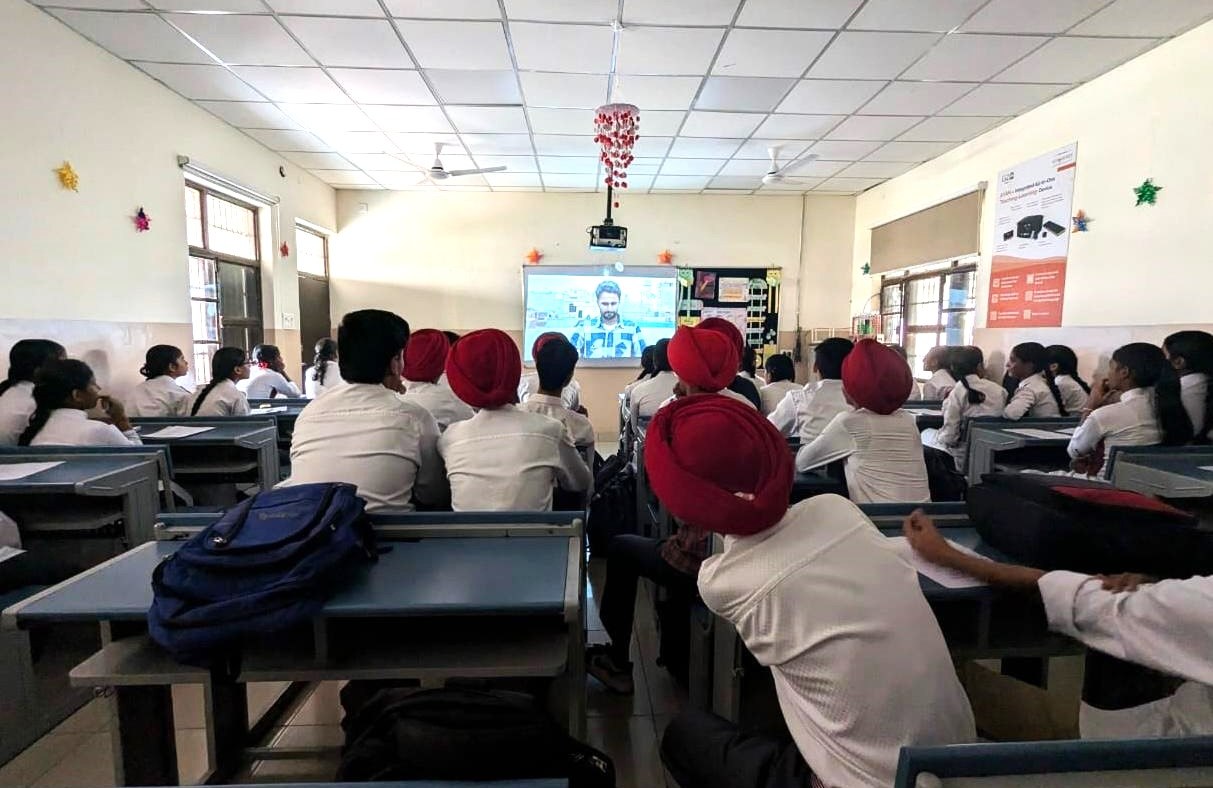
Students watching a documentary film in class.
Among youth, drug use and addiction typically begin with experimentation. To understand what drives youth toward this first risky step, our team spent six months conducting fieldwork in Punjab. A core insight emerged: widespread misbeliefs about the addictiveness of drugs. Youth tend to underestimate the risk of developing an addiction after trying a drug just once or twice, and believe that willpower alone is enough to overcome addiction once it takes hold. These misbeliefs can make experimentation feel far less risky than it actually is, pulling youth toward the very behavior that leads to addiction.
This insight pointed to a clear opportunity: a curriculum designed specifically to correct these misbeliefs before they translate into risky behavior. Narrative-driven "edutainment" of this kind has a strong track record of shifting other harmful behaviors, from unprotected sex to smoking — making it both an evidence-based and cost-effective way to reach youth at scale.
Nasha Mukt Punjab: School Nashiyan Virudh (Drug Free Punjab: Schools Against Addiction) is a film-based drug prevention curriculum that seeks to tackle this problem. The program centers on high-quality documentary videos in which people in recovery share honest, relatable accounts of their experiences with drugs.
The curriculum centers on eight documentary films, along with two expert videos on the science of addiction. Each is paired with quizzes, discussion guides, and posters designed to improve retention, encourage reflection, and promote deeper engagement, as well as worksheets and activities that give students an interactive learning experience.
 ▶
▶
Sample the curriculum: Jarnail's story.
Hear teachers and students share their firsthand experience with the curriculum.
On the basis of strong evidence of impact (see the Evidence tab), the Department of Education, Punjab is now implementing the curriculum in secondary schools statewide (see the Impact at Scale tab).
In total, the curriculum has already reached over 1 million students across Punjab. Building on this momentum, we're in conversations to adapt and scale the program in four additional states across India.
Everything we take to scale is grounded in evidence. For the drug prevention program, two studies speak to impact: a completed School RCT, and an ongoing Vocational Institute RCT.
A randomized evaluation of the program with nearly 10,000 students showed that the drug prevention program effectively shifted beliefs about the risks of heroin. Students randomly assigned to participate in the program were 30% more likely to believe that heroin is highly addictive, and nearly 50% less likely to believe that overcoming addiction is a matter of willpower alone. These beliefs matter because they sit at the root of experimentation and drug use — young people who underestimate addiction risk and overestimate their own ability to quit are more likely to try drugs in the first place.
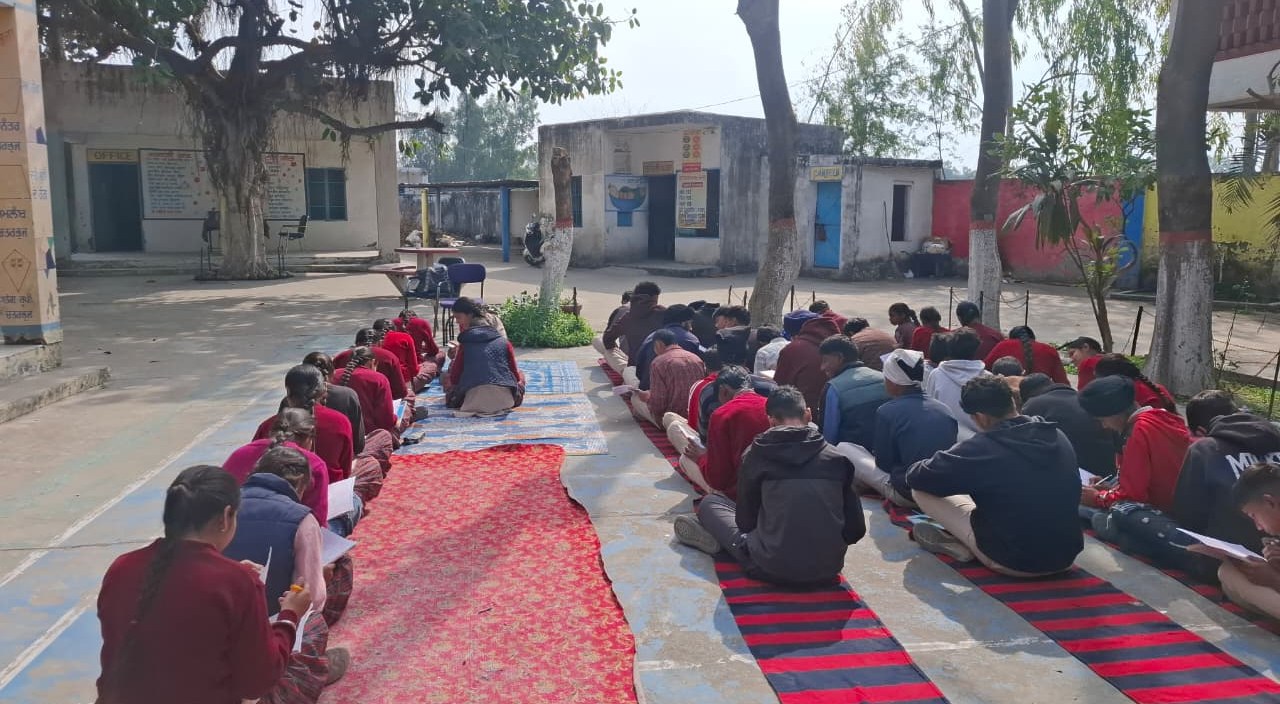
Endline data collection as part of the School RCT.
Results from RCT including 9,600 students across 78 government secondary schools.
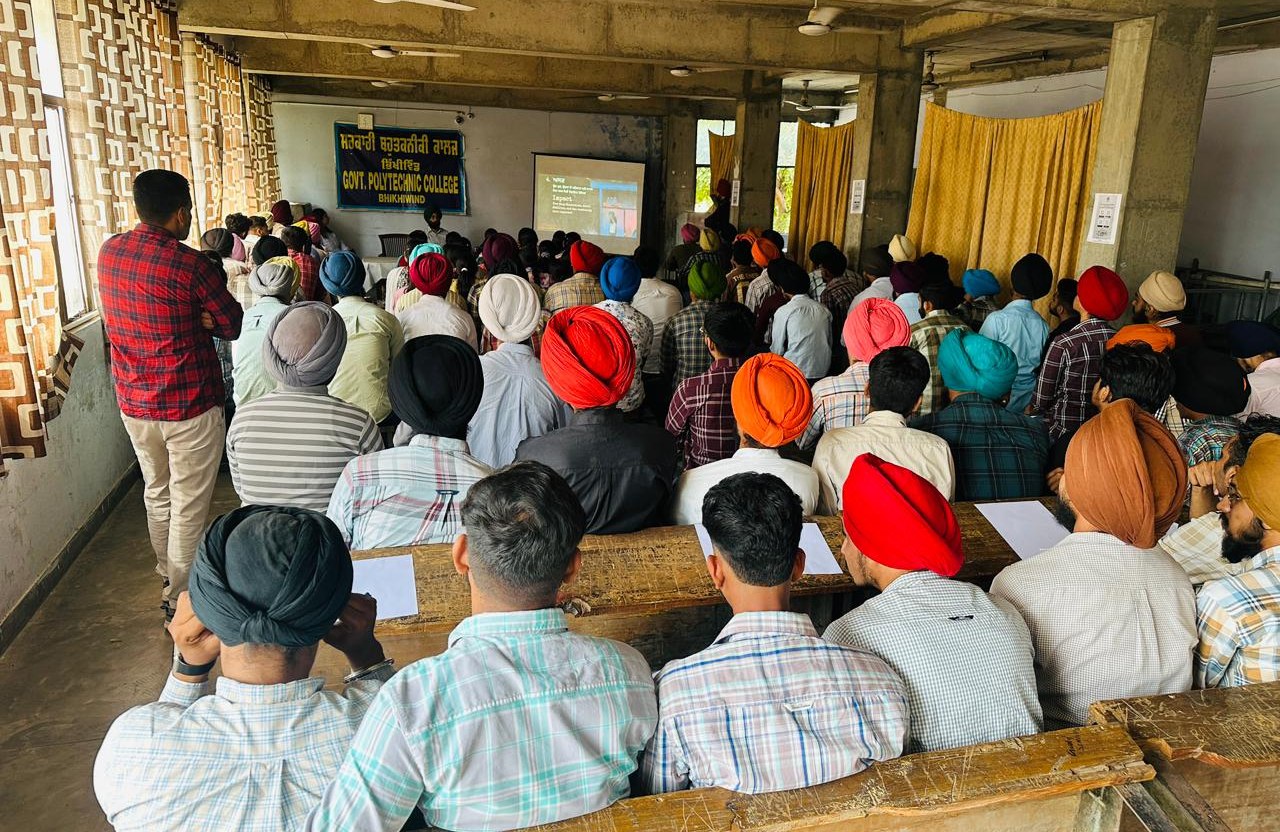
Students at a Vocational Institute viewing the drug prevention curriculum.
Another important question for the program is whether shifting beliefs about drug use also translates into a shift in behavior. The next phase of this research extends the school-based evaluation by examining impacts on health behaviors, educational outcomes, and labor market outcomes among a different population: vocational institutes, which enroll large numbers of young adults, many from modest economic backgrounds, preparing to enter the workforce.
An ongoing randomized controlled trial, involving all government and private vocational institutes throughout Punjab, is following a sample of 8,000 students across over 400 institutes to estimate the program's impact on drug use behavior, academic performance, and labor market outcomes.
Strong government partnerships enable us to implement and evaluate this program at the scale of an entire public school system, from statewide rollout to rigorous, randomized measurement of impact.
Based on rigorous evidence demonstrating the program's effectiveness (see the Evidence tab), the Department of Education, Punjab first scaled the drug prevention program throughout all government secondary schools during the 2025-2026 academic year, reaching over 750,000 students across 3,600 schools. At-scale implementation continues into the 2026-2027 academic year, with 9th and 10th graders completing the full curriculum, while 11th and 12th graders encounter a version modified to fit within the state-mandated curriculum.
This kind of reach is possible because the curriculum was built to scale: its video-based format is low-cost to implement while maintaining program quality across thousands of classrooms. Teachers are trained using a cascading training model, and compliance is tracked through session-wise screening forms that feed into a live monitoring dashboard, giving stakeholders real-time visibility into program delivery and accountability at every school.
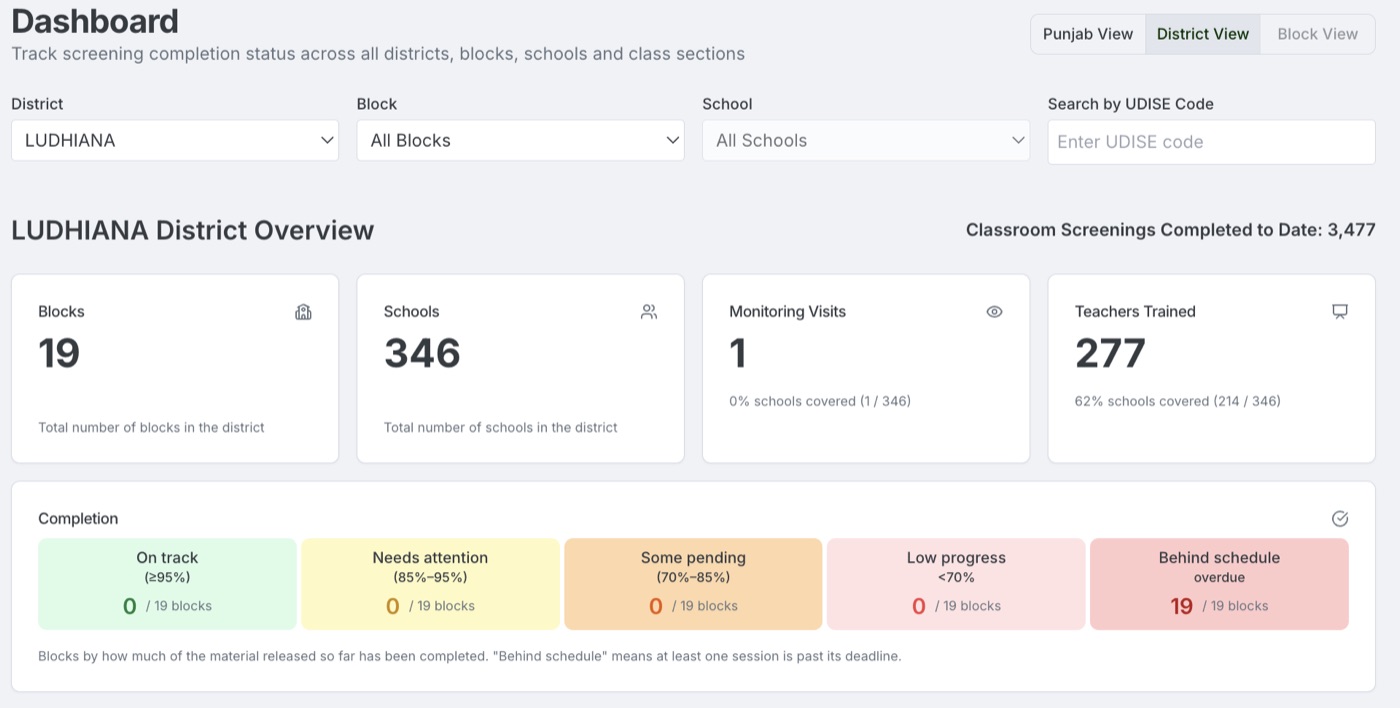
The live monitoring dashboard, tracking curriculum rollout across districts, blocks, and schools in real time.
The next step in this research evaluates the efficacy of the drug prevention program as implemented at scale on beliefs about drug use and on academic performance. Researchers will evaluate the program using a difference in differences strategy, comparing board exam scores among students in cohorts that did or did not participate in the program.
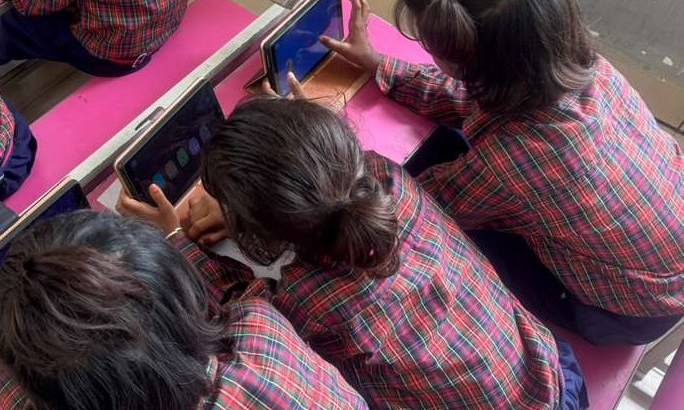
Students using tablets for adaptive math practice.
In low- and middle-income countries (LMICs), many students struggle to master basic literacy or numeracy, despite spending years in school. According to the 2024 ASER learning assessment, only a third of 3rd grade students in rural government schools in India could complete a subtraction problem, a competency often introduced as early as 2nd grade. Similarly, less than a quarter of 3rd grade students in these schools were able to read a 2nd grade level text.
Digital tools have shown real promise for closing gaps like these, but these solutions have struggled to scale. Many software solutions don't address the extreme heterogeneity within a single classroom, demand too much initiative from teachers, and ignore or compound the administrative burdens they already carry. Further, such solutions are often too costly for public systems to sustain.
Our answer is the Build for Schools initiative, which builds novel digital tools for schools in under-resourced settings. Our approach applies behavioral science to redesign these tools with practical scalability in mind — building for teachers, not just students, so the technology integrates seamlessly into daily classroom instruction rather than adding to teachers' burden.
Our initial test cases are in Punjab, India, a state with nearly 6 million enrolled schoolchildren, and where our close partnership with the state government provides an unprecedented opportunity to conceptualize, pilot, and deploy digital learning tools across the entire public school system. Having government involvement from day one allows us to assess needs and opportunities on the ground, pilot in real classrooms, and iterate quickly, with each step of the process oriented towards achieving impact at scale.
As one example, in collaboration between Parvaaz, J-PAL South Asia, and the Department of Education, Punjab, our team is introducing tablet-based software to deliver personalized math practice directly into 2nd and 3rd grade classrooms. This program gives students the opportunity for structured, personalized practice that reinforces what they learn during class time. The content aligns closely with the state curriculum, is delivered in Punjabi, and uses a low-cost implementation model that integrates seamlessly into instruction — allowing teachers to focus on teaching rather than managing technology.
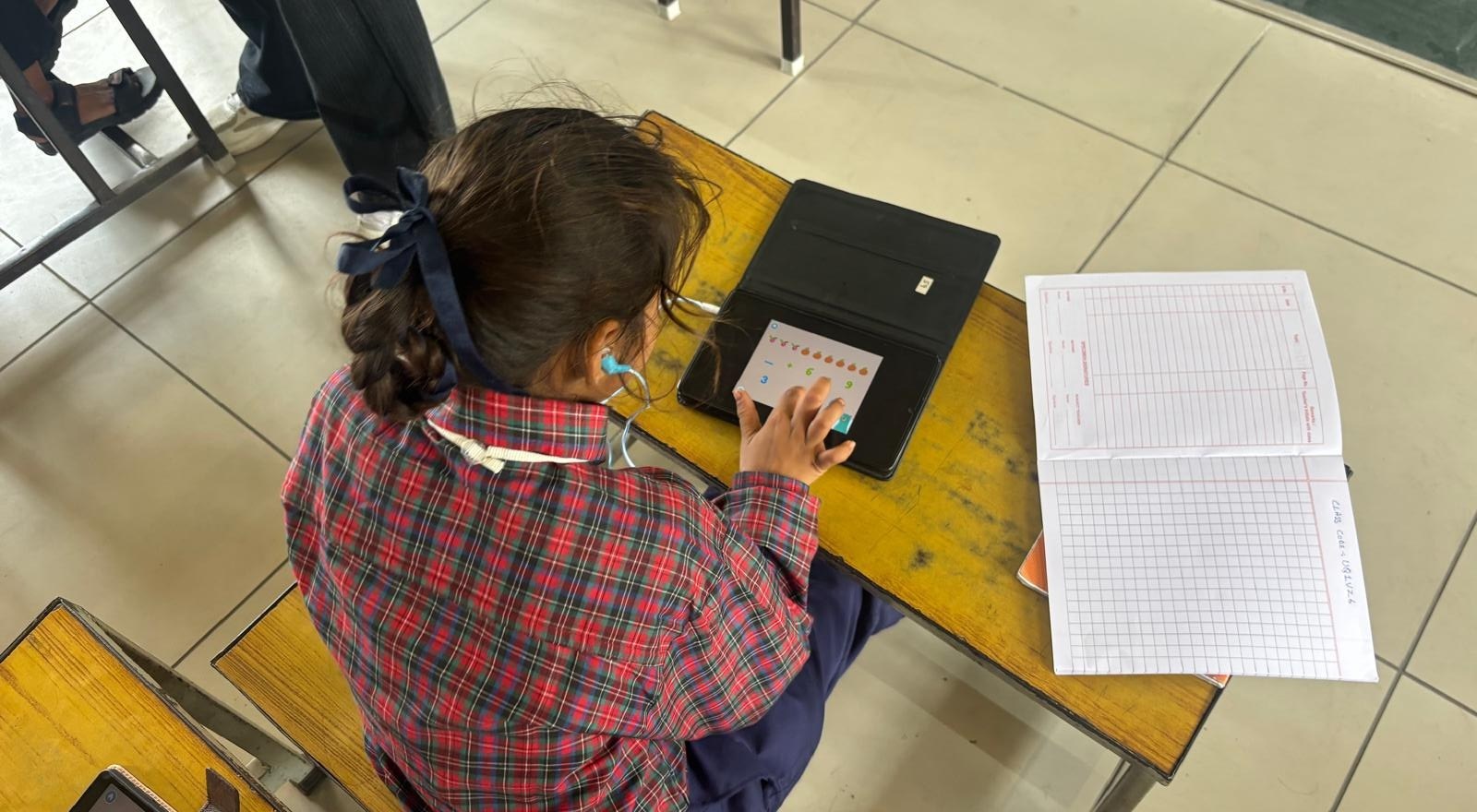
A student working through adaptive math practice on a tablet.
Following the Parvaaz model, we plan to introduce the solution at scale and in parallel rigorously measure impacts — testing whether learning gains persist when scaling from pilot to statewide rollout. Our aim is to deploy across all of Punjab, then release the tools publicly, free of cost.
We've proven this model works: our drug prevention curriculum reached over 750,000 students in its first year in partnership with Punjab. The same approach — rigorous measurement paired with government partnership — similarly guides our work on digital learning tools.
AI has the potential to unleash substantial economic growth in low- and middle-income countries (LMICs), where the vast majority of economic activity is dominated by low-productivity firms. Powerful new AI tools could dramatically lower the costs of technical development and adoption, boosting firm productivity and reshaping labor markets.
This work seeks to understand the potential of AI tools to reshape labor market outcomes and boost firm productivity through two interventions: an AI skills training bootcamp for college students, and a market-level experiment testing the aggregate impacts of AI tool adoption.
This project tests and scales an AI bootcamp designed to equip college students with practical AI skills for the modern economy. Training combines rigorous instruction on AI tools with hands-on experience building simple, market-demanded systems, plus field assignments where students create real technological solutions for local businesses. The goal is to help graduates unlock new employment opportunities and build thriving businesses of their own as entrepreneurs.
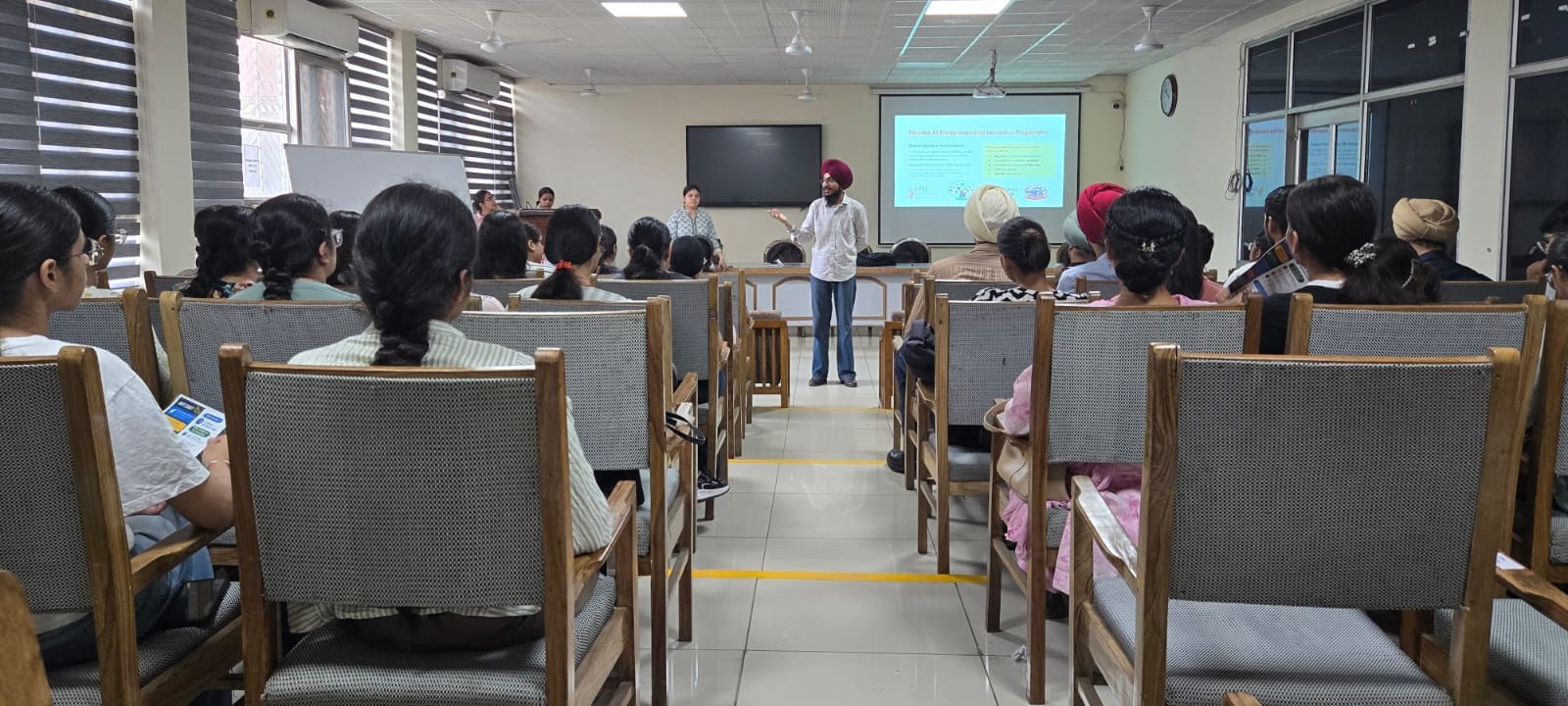
Info session with prospective applicants to the AI bootcamp.
An inaugural cohort of students from Guru Nanak Dev Engineering College in Ludhiana is currently participating in the AI bootcamp. This pilot run — conducted in partnership with Sabudh Foundation and with generous support from Anthropic — will let us refine the curriculum, validate that participants can build and deploy working products for local firms after completing the bootcamp, and prepare us to expand to multiple universities.
Next, we will conduct a formal evaluation with a sample of hundreds of students across six universities in Punjab, India, rigorously testing whether the AI bootcamp boosts employment, fosters new business creation, and increases earnings among graduates. If successful, we would partner directly with universities to incorporate the bootcamp into their computer science curricula — providing a path to scale for enhancing the AI skillset of millions of new entrants to the labor market.
A second component of this work explores the economy-wide impacts of AI tools by saturating some cities' labor markets with AI-skilled talent, while leaving others as a comparison group. This lets us test whether a high concentration of skilled talent affects the growth of technology firms and the adoption of tech tools across the tech sector, non-tech sector, and government. It also lets us test for overall impacts on aggregate employment and economic activity at the city level, including whether and how employment patterns shift across sectors. This speaks directly to how policymakers might use AI training to drive local employment and firm growth — investing in individuals to foster local economic development.
Parvaaz exists to bridge the gap between cutting-edge research and the people it's meant to help. Closing that gap — turning evidence into programs that reach millions — means partnering with governmental bodies and implementing organizations from a project's earliest stages, not after the findings are in. The people and partners below make that work possible.

Senior Research Manager, Center for Effective Global Action (CEGA)

Associate Professor of Business and Economics, UC Berkeley Haas School of Business and Department of Economics
We thank our partners for funding and support